30MW Palm Biomass Power Plant
Fabricated in Perak Plantation Belt. Epoxy coating, bolted trial assembly. Handover 35 Days Ahead of Time.
Project Facts
The commercial and technical facts a contractor checks before requesting drawings.
| Industry | Palm Waste-to-Energy Power Plant |
|---|---|
| Location | Perak Plantation Belt, Malaysia |
| Construction Type | Rigid Boiler Frame & Conveyor Trusses |
| Project Scale | 26,000 Tons Structural Steel |
| Service Environment | Acid-Resistant Epoxy Phenolic |
| Delivery Result | Handover 35 Days Ahead of Time |
| Our Scope | Fabrication, epoxy coating, bolted trial assembly and delivery |
Project Overview
How the structure was engineered, fabricated and delivered in Perak Plantation Belt.
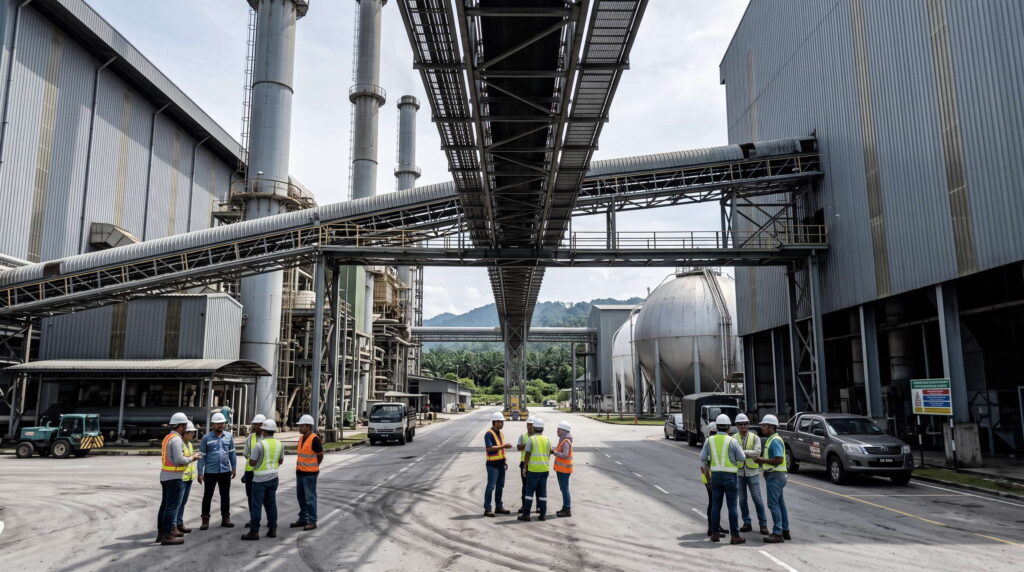
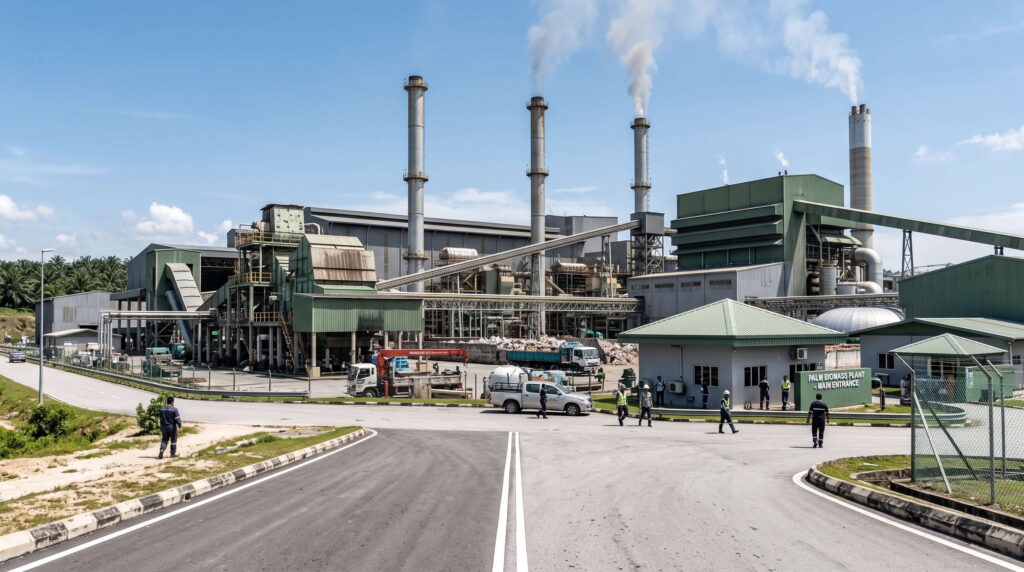
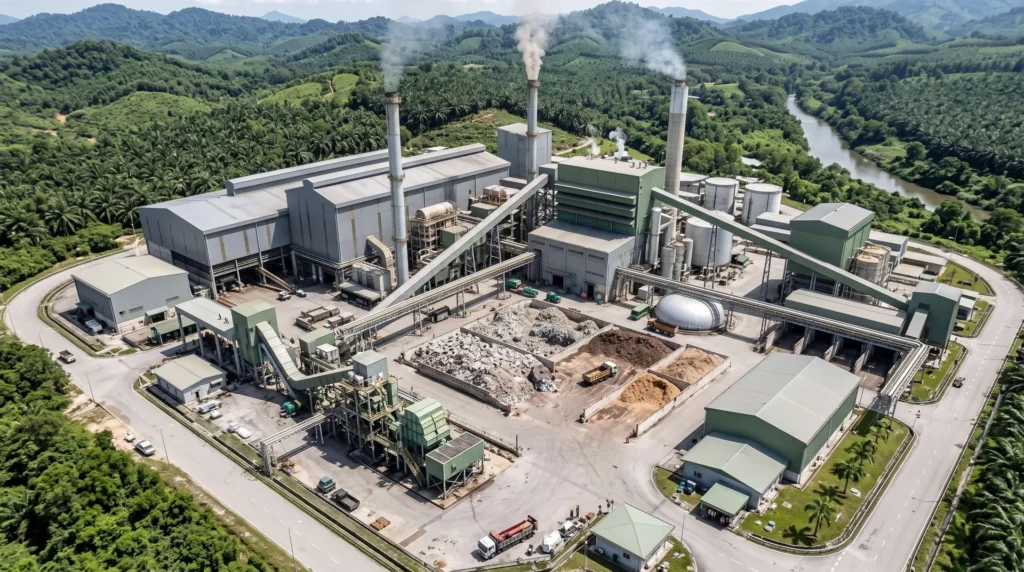
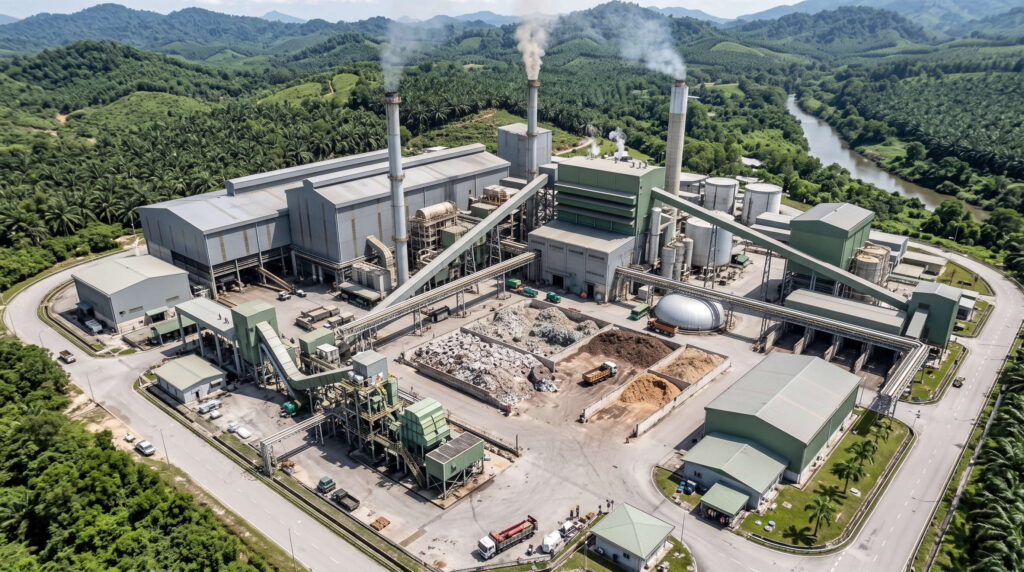
Located in Perak, Malaysia, this 30MW biomass plant converts palm residues into electricity. Handling empty fruit bunches creates demanding operating conditions.
Managers must ensure steady fuel delivery amidst monsoon rain and heat. Practical concerns include conveyor vibration from continuous transport, corrosion from organic acids released by damp biomass, and tight erection windows between storms.
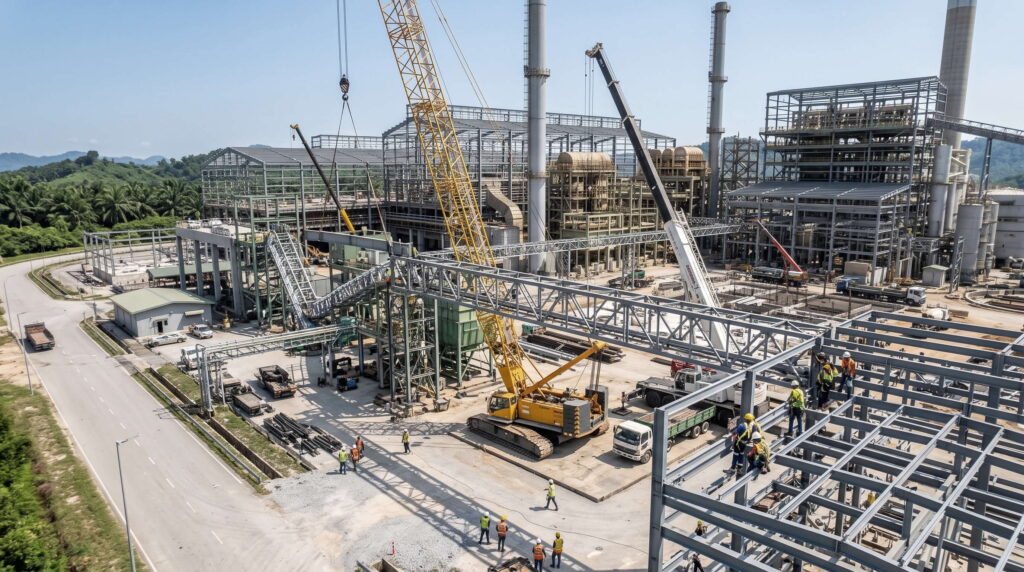
Shijie engineered a reliable structural system for the facility. We fabricated heavy boiler frames and enclosed conveyor galleries with stiffeners to dampen vibration.
Columns near storage received acid-resistant epoxy coatings to counter corrosive leachate. Using pre-drilled bolted joints, crews erected the structures 35 days early, enabling testing before the monsoon.
Four Decisions That Made It Work
30MW Palm Biomass Power Plant in Malaysia
Heavy Conveyor Galleries and Acid-Resistant Systems
Dynamic Stiffening
Enclosed galleries feature reinforced bracing to suppress operational vibration during fuel transport.
Acid Protection
Steel members near biomass storage are coated with epoxy phenolic to resist corrosive organic acids.
Enclosed Corridors
Clad elevated galleries prevent wet fuel clumping during sudden rainstorms, stabilizing boiler feed.
The Project, As Built
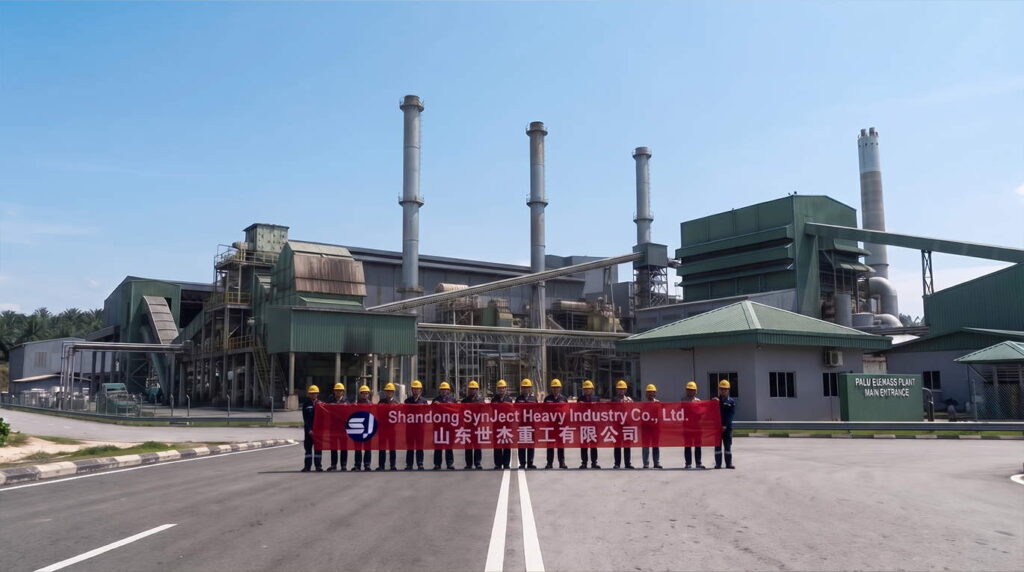
Completed works, structural details and the delivery team on site.


Client Testimonial
Feedback recorded from the client after handover.

Operating a biomass plant near Malaysian palm estates presents tough conditions. Decomposing palm residues produce acidic runoff, and equatorial rain is relentless. Our priority was verifying conveyor stability and anti-corrosion performance near bunkers.
Frequently Asked Questions
Answers engineers ask before committing to a scope like this.
What was built for this Malaysian biomass plant?
About 26,000 tons of structural steel for a 30MW palm-residue power plant in Perak, including heavy boiler frames and 48-metre clear-span enclosed conveyor trusses carrying fuel from storage to the boiler.
Long-span conveyors vibrate continuously. How is fatigue avoided?
Box-section trusses with high-strength friction-grip bolted joints maintain joint rigidity, and the galleries are reinforced with bracing to suppress operational vibration. A friction-grip connection does not work loose the way a bearing connection does under sustained dynamic load.
Damp palm biomass releases organic acids. What protects the steel?
An industrial epoxy phenolic coating system on columns and baseplates near the storage bays, where acidic runoff concentrates. Standard decorative coatings simply do not survive that chemistry.
Why enclose the conveyor galleries rather than leave them open?
Because wet fuel clumps and blocks the feed. Cladding the elevated galleries keeps monsoon rain off the biomass, which stabilises boiler feed and protects the belt from UV degradation at the same time.
Can erection continue through equatorial rain?
That is the reason for pre-drilled bolted joints. Crews assemble in the gaps between rainfall instead of waiting for a dry window long enough to weld and inspect, and the plant was handed over 35 days ahead of time.
Get Your 24-Hour BOQ and Cost Plan
See how much steel tonnage and ocean freight you can save before fabrication begins
Steel Weight Savings
1:1 Tekla 3D modeling optimizes beam-column ratios to eliminate redundant material costs.
Zero-Clash Code Verification
Checked against EN 1090 and local wind/seismic loads.
Engineer-to-Engineer Review
Verified by our lead engineers—Zero pushy sales calls, Just actionable data and factory price.
CE EN 1090-1•ISO 9001•ISO 14001•ISO 45001
Lead Engineers Online
🔒 100% Private and Secure, No Spam