Steel Warehouse · Mali

36,000 t Grain Storage Sheds

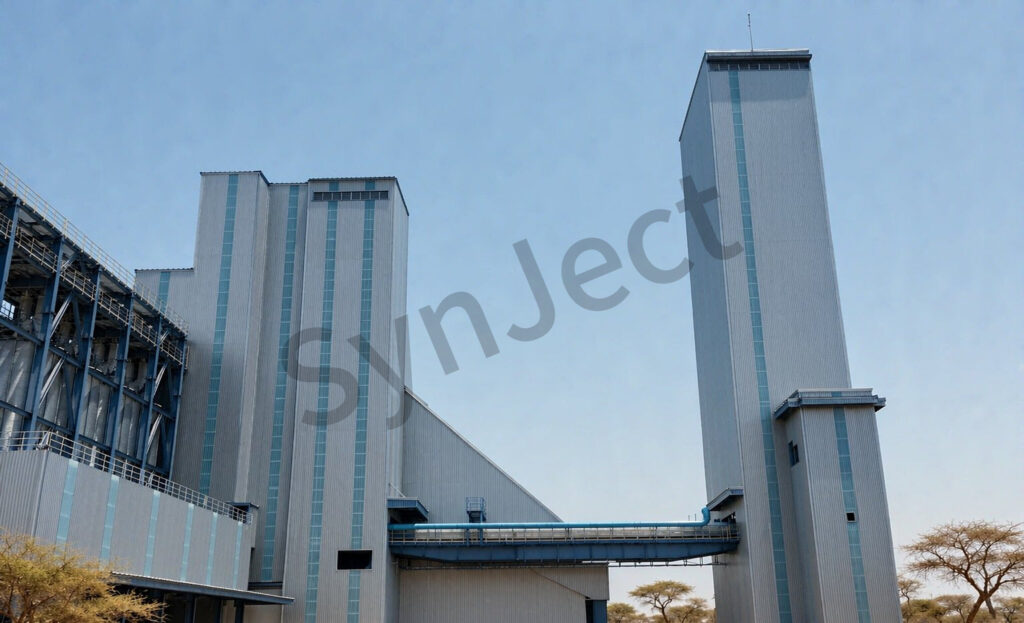
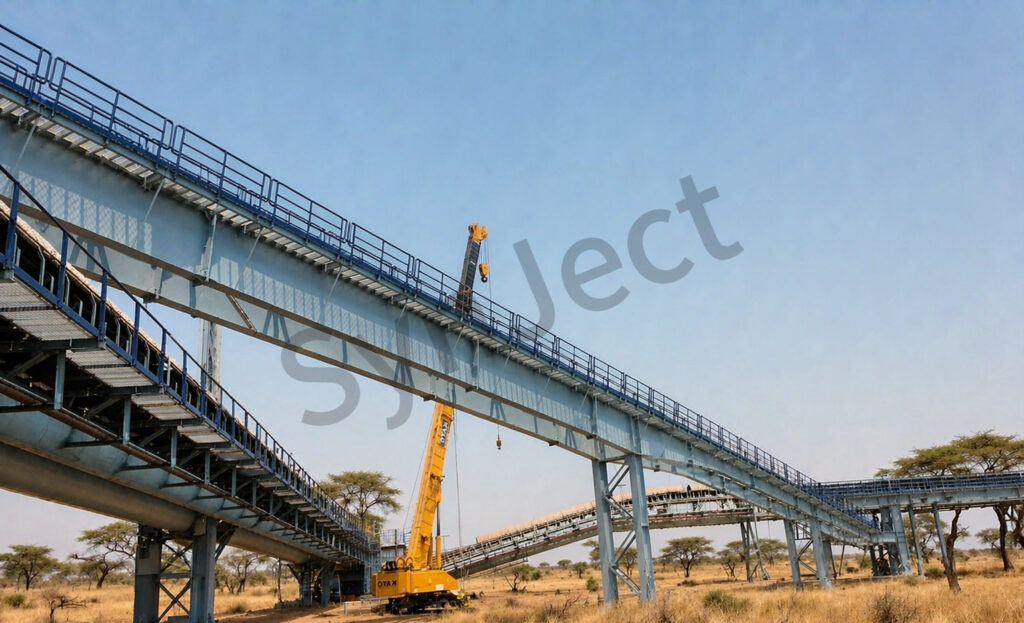
Two 72 m curved-roof sheds with the conveyor running over the roof and silos at the head — bulk grain kept dry in a Sahel climate.

36,000 tGrain capacity
72 mShed span
2 shedsSide by side
12,400 m²Under roof

Project Facts

Facts a contractor checks first: Grain storage · intake, bulk holding, reclaim and outloading - Galvanised curved-roof structure on concrete walls, Two sheds, 12,400 m² in total.

Project facts and specifications
IndustryGrain storage · intake, bulk holding, reclaim and outloading - conveyors over the roof
Construction typeGalvanised curved-roof structure on concrete walls - 72 m spans, 18 m at the crown
Project scaleTwo sheds, 12,400 m² in total - 36,000 t combined capacity
LocationAgricultural collection point, Mali - 45 °C peaks, dust, seasonal rain
CollaboratorsGrain handling contractor · silo supplier · local civils - conveyor gantries framed with the sheds
Delivery59 weeks - sheds, gantries, silos connected
Our scopeStructural design and 3D modelling · galvanised curved-roof framing · roof sheeting and purlins · concrete retaining walls and reclaim tunnels · conveyor gantry and support towers · silo connecting bridges · ventilation openings · drainage and rainwater disposal · access walkways and handrails · erection drawings and site support

Project Overview

SynJect supplied the structural steel for two grain storage sheds in Mali — 12,400 m² under roof, 36,000 t of combined capacity, with 72 m curved roofs and the conveyor gantries running over them to a pair of silos at the head of the site.

SynJect supplied the structural steel for two grain storage sheds in Mali — 12,400 m² under roof, 36,000 t of combined capacity, with 72 m curved roofs and the conveyor gantries running over them to a pair of silos at the head of the site.

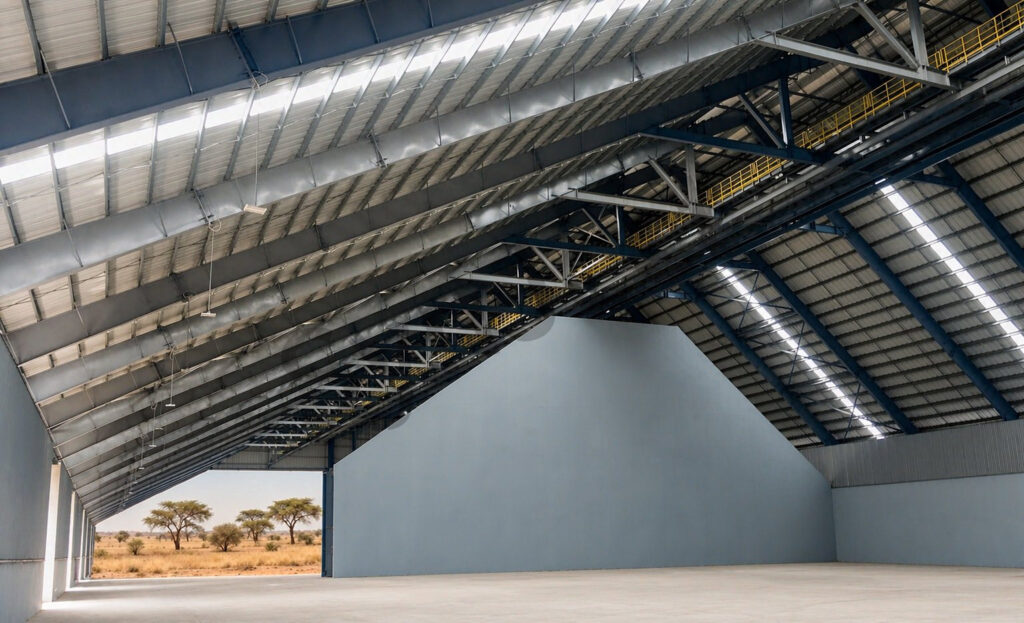
A bulk store is loaded by dropping grain from above and emptied by reclaim from below, so the building is really a container. The 72 m curved roof follows the natural angle of repose of the heap, which means the shed holds more for the same footprint and the loader never has to push grain uphill into a corner.

The concrete walls take the horizontal push, the steel roof only has to span and keep the rain out, and the conveyor gantries are framed with the sheds rather than added later. In a Sahel climate, the roof also has to shed a season's rain in a few hours, which is why the curve runs to two long gutters instead of a hundred small outlets.

Photographed after handover with the yard swept and the silos connected. A grain store is judged by what it keeps out: rain, dust and rodents, in that order.
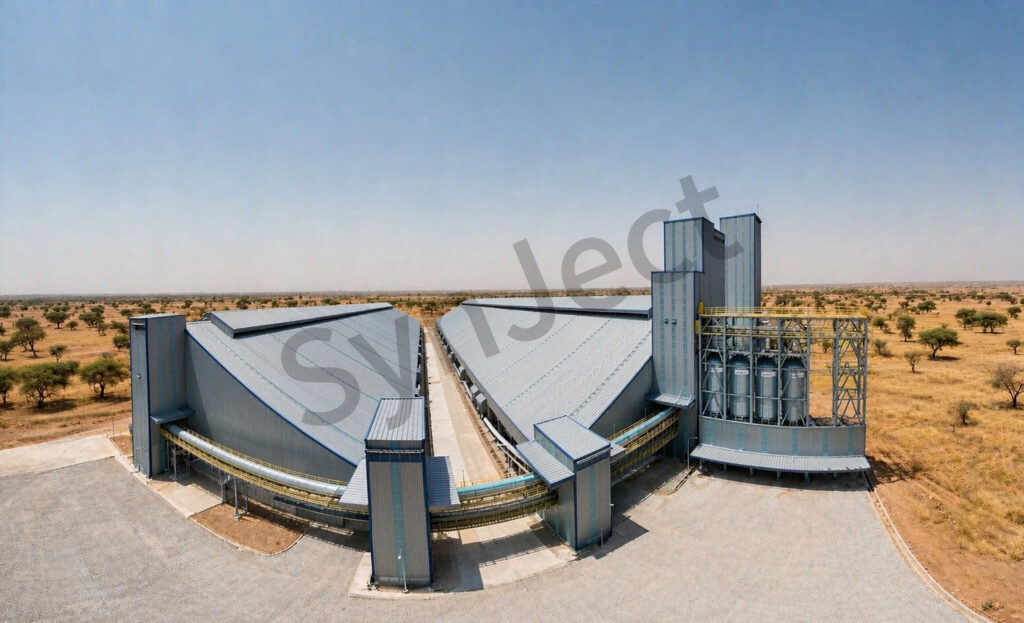
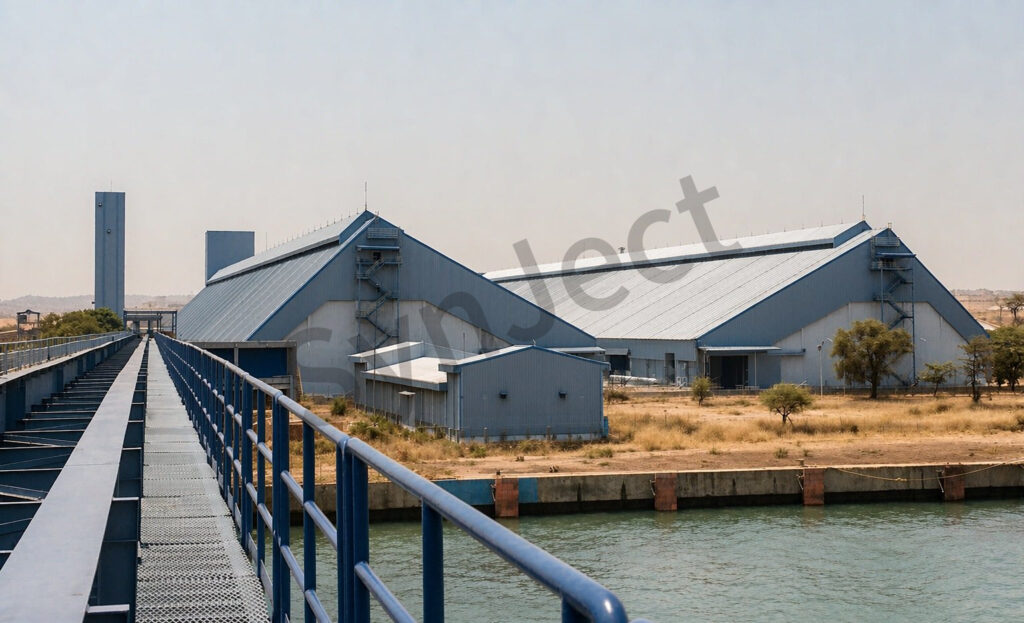
Two completed curved-roof grain storage sheds in Mali with pale silver sheeting, conveyor gantries and silos at the head of the site

Four Decisions That Made It Work

01

Follow The Angle Of Repose

A curved roof over a bulk heap uses the volume a flat-roofed shed wastes above the peak.

02

Concrete Pushes, Steel Spans

Retaining walls take the grain load; the steel only spans and weathers in, which is the cheapest split.

03

Frame The Gantries With The Sheds

Conveyor supports designed as part of the structure, not bolted to a finished roof afterwards.

04

Drain To Two Gutters

A season's rain arrives in hours here, so the curve runs to two long outlets that can actually be maintained.

Client Testimonial

Feedback from Storage Manager after handover.

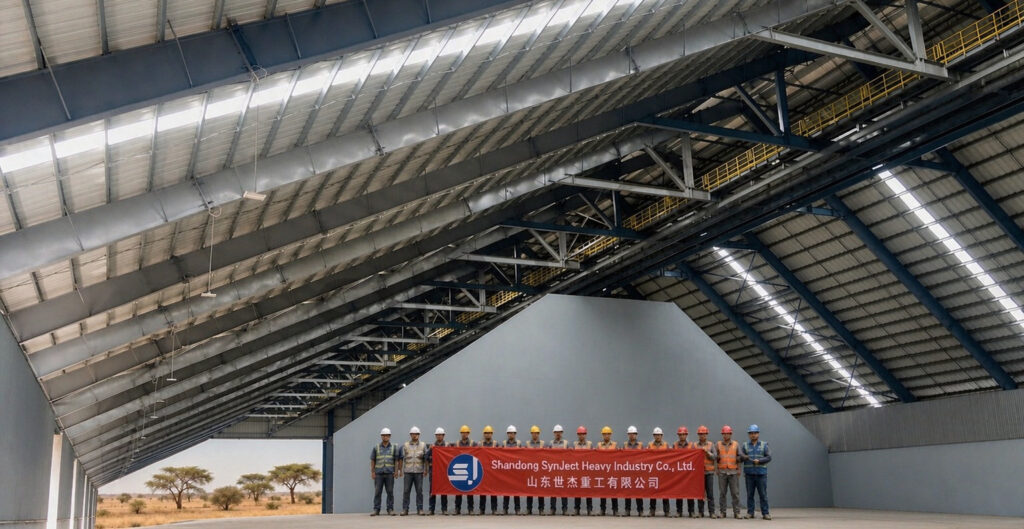
SynJect erection crew in hard hats holding a red company banner on the yard in front of the two curved-roof grain storage sheds in Mali
Fabrication and installation team on site
“

Thirty-six thousand tonnes under two roofs, and the grain comes out as clean as it went in. That is the whole test.

Storage ManagerGrain cooperative, Mali
36,000 t capacity72 m curved spanConveyor on roof

Frequently Asked Questions

Common questions from buyers specifying this building type.

Why a curved roof instead of a gable?

Because it follows the shape of the heap. A gable wastes the volume above the grain peak and creates corners that are hard to reclaim from.

The concrete retaining walls. Splitting the job that way keeps the steel light and puts the mass where it resists the grain.

By the roof and the detailing rather than by machinery: a continuous curved sheet, two long gutters, sealed wall junctions and ventilation that moves air without letting rain in.

Yes. A third shed repeats the same span and detailing, and the conveyor gantry is designed with a spare head for it.

Sealed junctions and a roof that sheds rather than traps. Dust control in a grain store starts with the building envelope.

Get Your 24-Hour BOQ and Cost Plan

See how much steel tonnage and ocean freight you can save before fabrication begins

8–15%

Steel Weight Savings

1:1 Tekla 3D modeling optimizes beam-column ratios to eliminate redundant material costs.

0.0mm

Zero-Clash Code Verification

Checked against EN 1090 and local wind/seismic loads.

100%

Engineer-to-Engineer Review

Verified by our lead engineers—Zero pushy sales calls, Just actionable data and factory price.

CE EN 1090-1•ISO 9001•ISO 14001•ISO 45001

Engineering & Inquiry Desk

Lead Engineers Online

Drawings
Drawings

🔒 100% Private and Secure, No Spam