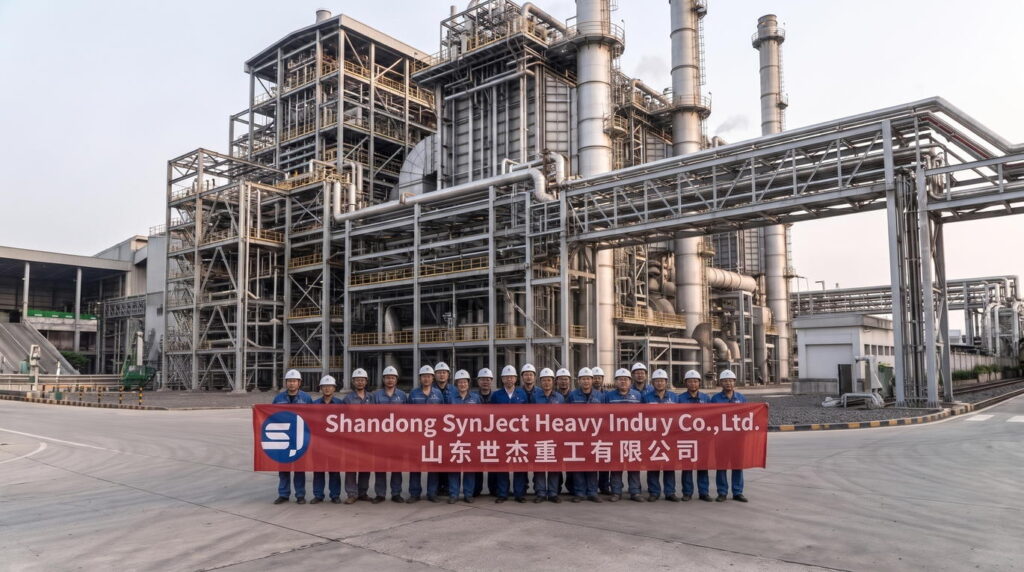
35MW Waste-to-Energy Plant
Fabricated in Eastern Economic Corridor. Handover 40 Days Ahead.
Project Facts
The commercial and technical facts a contractor checks before requesting drawings.
| Industry | Municipal Waste-to-Energy Plant |
|---|---|
| Location | Eastern Economic Corridor, Thailand |
| Construction Type | Rigid Boiler Towers & Pipe Racks |
| Design & Execution | Sub-Millimeter Flange Alignment |
| Service Environment | Acid-Resistant Epoxy Phenolic |
| Delivery Result | Handover 40 Days Ahead |
| Our Scope | 32,000 Tons Structural Steel |
Project Overview
How the structure was engineered, fabricated and delivered in Eastern Economic Corridor.
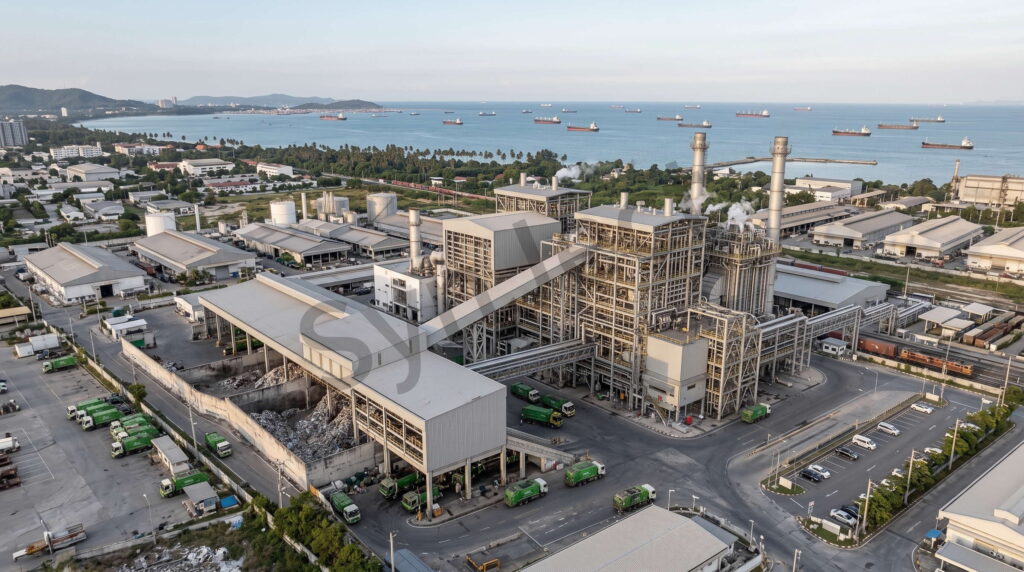
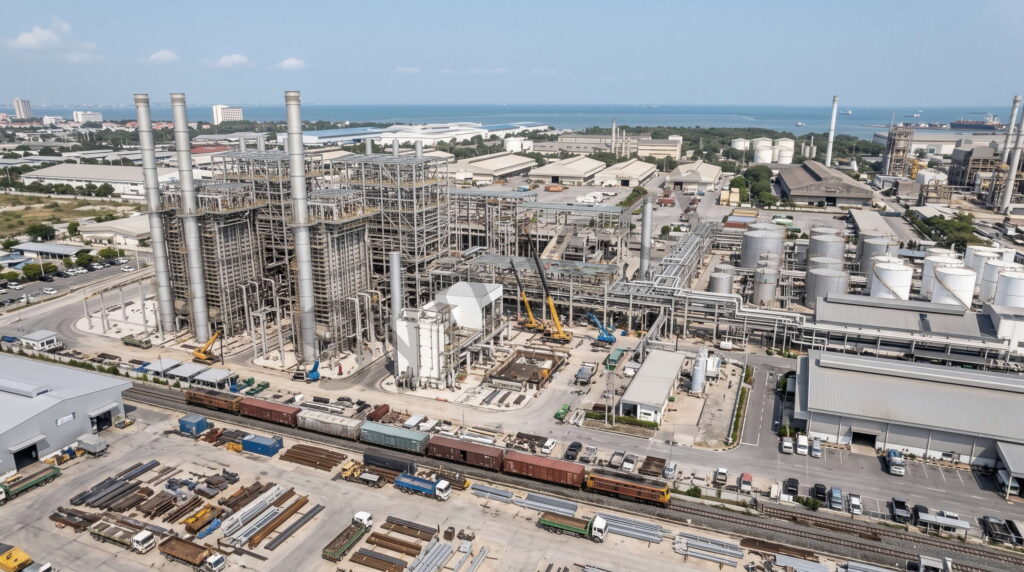
Located in the Eastern Economic Corridor of Thailand, this 35MW waste-to-energy facility processes municipal solid waste to generate base-load electricity. Constructing heavy industrial power structures in a tropical climate requires practical engineering execution.
Facility operators face persistent operational challenges: managing the heavy weight of multi-tier incinerator boilers, protecting waste reception halls from acid corrosion caused by municipal leachate and biogas, and ensuring strict erection accuracy to align high-pressure steam flues. Shijie Heavy Industry met these project demands with an integrated structural solution.
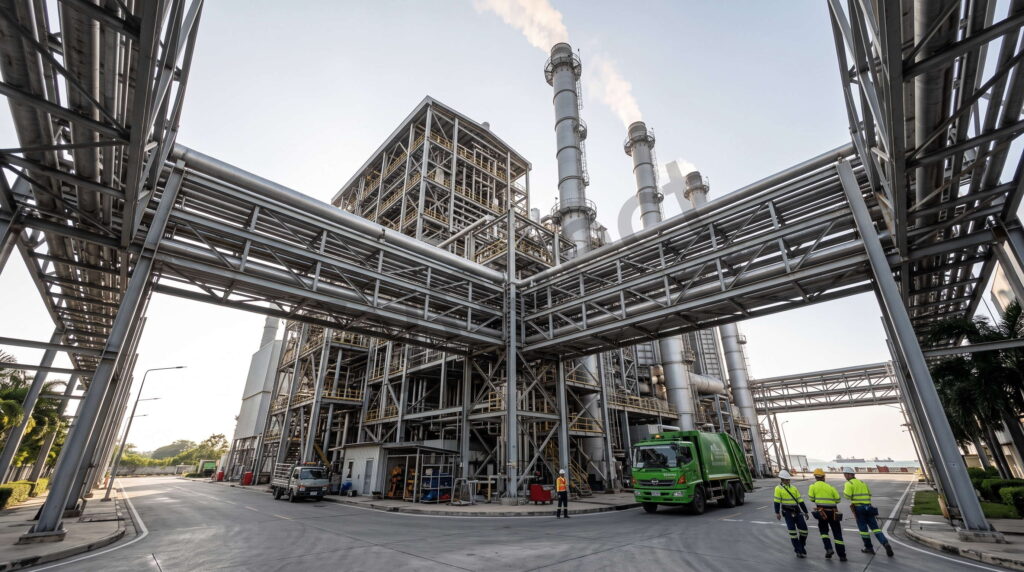
We manufactured rigid steel towers using deep-flange H-beams and braced frames to support suspended boiler loads and adjacent multi-flue exhaust stacks. Columns and bracings near the municipal waste tipping pit received an industrial epoxy-phenolic coating system to resist organic acid vapors.
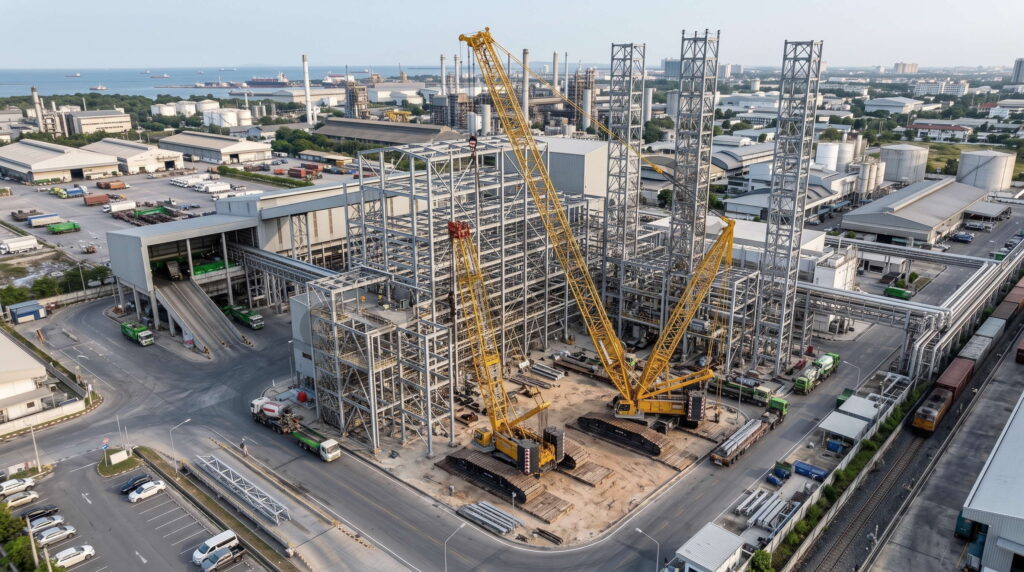
Using pre-drilled bolted joints, crews erected the towers systematically. Handing over 40 days early allowed boiler teams to begin pressure testing on time.

Four Decisions That Made It Work
35MW Waste-to-Energy Plant in Thailand
Incinerator Towers and Leachate-Resistant Steel Framing
Heavy Suspension Rigidity
High-strength steel box girders safely carry the dynamic loads of suspended waste-incineration boilers and header drums.
Leachate Corrosion Armor
Heavy-duty epoxy phenolic paint on structural bases blocks chemical attack from damp municipal waste leachate and sulfides.
Exhaust Stack Integration
Multi-tier support frames safely stabilize three industrial exhaust flues against tropical typhoon wind vibrations.
The Project, As Built
Completed works, structural details and the delivery team on site.


Client Testimonial
Feedback recorded from the client after handover.

Managing a municipal waste plant in Thailand requires managing both heavy mechanical weight and chemical corrosion. In our tropical heat, moisture and acidic leachate degrade structural steel quickly if surface treatments are not applied correctly.
Frequently Asked Questions
Answers engineers ask before committing to a scope like this.
What was supplied for this Thai waste-to-energy facility?
About 32,000 tons of structural steel for a 35MW municipal waste-to-energy plant in the Eastern Economic Corridor, covering rigid boiler towers, pipe racks, tri-flue stack support framing and the bracing that ties the plant together.
Boilers hang rather than sit on the ground. How does the structure carry them?
High-strength steel box girders form a suspended grid that carries the dynamic loads of the incineration boilers and header drums. Suspended boiler structures see cyclic thermal and pressure cycling, so the girder detailing and connection design account for repeated loading, not just static weight.
Municipal waste produces leachate that eats steel. What protection is used?
A heavy-build epoxy phenolic barrier coating on all steel within about 30 metres of the waste storage area, including columns and base plates. Epoxy phenolic is chosen specifically because it resists the acid and sulphide chemistry that leachate and biogas produce.
High-pressure steam piping cannot tolerate misalignment. How is that achieved?
Cross-braced moment frames built to tight shop tolerances limit structural lateral deflection under operating loads, and all nodes are pre-drilled and bolted so flange alignment is a fabrication outcome rather than a site correction. Steam connections leak when the steel moves, not when the pipe is badly made.
How are the exhaust flues stabilised against tropical storms?
Multi-tier support frames stabilise the three industrial exhaust flues and are designed for typhoon wind vibration, which is the governing case for a tall, slender stack assembly in this region.
Get Your 24-Hour BOQ and Cost Plan
See how much steel tonnage and ocean freight you can save before fabrication begins
Steel Weight Savings
1:1 Tekla 3D modeling optimizes beam-column ratios to eliminate redundant material costs.
Zero-Clash Code Verification
Checked against EN 1090 and local wind/seismic loads.
Engineer-to-Engineer Review
Verified by our lead engineers—Zero pushy sales calls, Just actionable data and factory price.
CE EN 1090-1•ISO 9001•ISO 14001•ISO 45001
Lead Engineers Online
🔒 100% Private and Secure, No Spam