Home / Products / Steel Structure Cladding / Drainage & Installation Accessories
Drainage & Installation Accessories
As an indispensable sub-system of the steel enclosure, our factory BIM-level precision-matched accessory matrix thoroughly rejects the “wooden barrel effect.” Utilizing hardcore fastening, sealing, and drainage solutions to eliminate fatal detailed risks for your million-dollar projects at overseas sites.
Downspouts
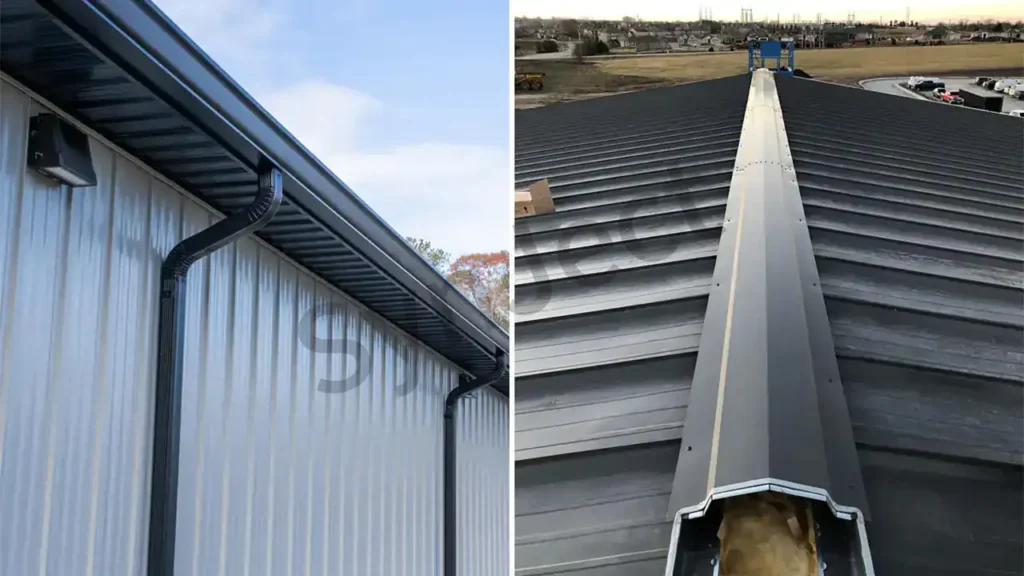
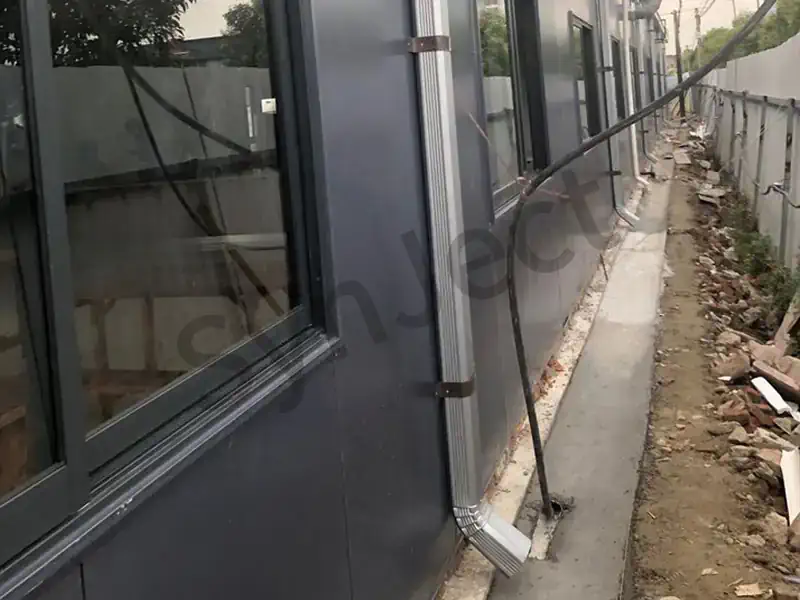
Downspouts work closely with gutters as the "aorta" of building drainage. If rainwater runs freely down exterior walls, it not only ruins aesthetics but continuously scours the foundation, causing fatal foundation settlement and corrosion at the base of steel columns. We offer large-diameter UV-resistant UPVC downspouts, or color aluminium downspouts matching the exterior wall panels. The system is standardly equipped with leaf filters, elbows, and heavy-duty pipe clips, forming a fully enclosed, high-velocity water diversion circuit to safely route roof water to the underground drainage network.
Technical Specifications
Advantages vs Engineering Considerations
Frequently Asked Questions
Our project is in a tropical rainforest climate with violent rainstorms. Will your gutters overflow and backflow into the factory?
Absolutely not. We strictly oppose sizing gutters "by feel." Our engineers retrieve the local "Maximum Rainfall Intensity" data for the past 50 years. Combined with the roof catchment area, we precisely calculate the gutter cross-section and downspout diameter using fluid dynamics. Paired with scientific overflow holes and baffle designs, even during rare century-level torrential rains, water is safely diverted, achieving absolute zero indoor backflow..
Locally sourced plastic downspouts turn brittle and crack in under 2 years under the equatorial sun, and metal gutters easily rust near the sea. How do you solve this?
Material selection is key to handling extreme climates. For downspouts, we use highly anti-aging modified UPVC pipes (with UV absorbers added) or high-yield color steel pipes, fearing no sun exposure or embrittlement. For gutters in high-salt coastal or chemical plants, we skip ordinary galvanized steel and upgrade directly to 304 / 316 Stainless Steel gutters. This combination perfectly resists intense UV and salt fog corrosion, ensuring the drainage system matches the building's lifespan.
Ordinary color steel screws rust after a few years, leaving ugly red rust streaks on the walls, eventually rotting and leaking. How to avoid this?
Reject cheap iron self-tapping screws! We standardly equip polar-grade anti-corrosion screws: featuring Dacromet coatings (passes 1000h salt spray) or 304 Stainless Steel. The head comes with a highly weather-resistant EPDM rubber washer. Upon drilling, the rubber ring expands to compress the hole, providing astonishing pull-out resistance and absolute physical sealing. We guarantee the screw outlasts the color steel, entirely eliminating rust streaks.
Steel roofs expand and contract violently under the blazing sun. Traditional silicone caulk cracks and leaks within 1-2 years. How long can your sealants last?
Civil silicone caulks are strictly prohibited on industrial steel structures. We standardly equip Permanent Flexible Butyl Waterproof Tapes. This is a 100% solid content, non-hardening polymer material with a 300% elastic elongation rate. No matter how violently the steel plates slide under day-night temp swings, it stretches like chewing gum without tearing. Applied correctly once, it provides over a decade of silicone-free, concealed lap-seam waterproofing.
The scariest part of typhoons is "capillary suction," where howling winds literally blow ponding water up into panel overlaps. Can your accessories prevent this?
This is the #1 pain point for leaks in typhoon zones. Besides the immensely fierce adhesion of butyl tape sealing the gaps, we mandatorily use Concealed Sliding Clips on roof systems. Panels are mechanically seamed 360° by a standing seam machine. This massive mechanical interlocking force not only thoroughly severs the suction path of rainstorms but perfectly withstands the terrifying negative wind pressure (uplift suction) generated by Cat 14 super typhoons.
Overseas labor is extremely expensive. If the containers arrive and we find two boxes of installation bolts missing, who bears the loss of the team stopping work to wait for materials?
We deeply understand that "missing accessories in overseas projects" is disastrous. Before shipping, we calculate the exact quantity of all screws, tapes, and clips 1:1 via BIM software, and mandatorily add a 3%-5% free redundancy allowance (Redundancy Guarantee). All accessories are independently boxed and coded according to drawing nodes. This ensures that once the containers land, you can start working right out of the box, never wasting even a minute of your foreign team's schedule.
To save cross-border freight, can we just buy the main steel and color panels from you, and buy screws and waterproof sealant at a local hardware store?
This is the most dangerous "penny-wise, pound-foolish" behavior in overseas engineering. Local hardware screws easily rust, and generic flashings absolutely cannot 100% fit our exclusively molded corrugated panels. Any gaps guarantee leaks. Our accessory kit is 1:1 molded and matched to the panels based on BIM models. Packaged procurement isn't expensive; it equates to paying a tiny cost to transfer 100% of the project's wind-proof and leak-proof liability to us. This is the smartest risk-hedging strategy for EPCs.
Cladding Steel Roof Gutters
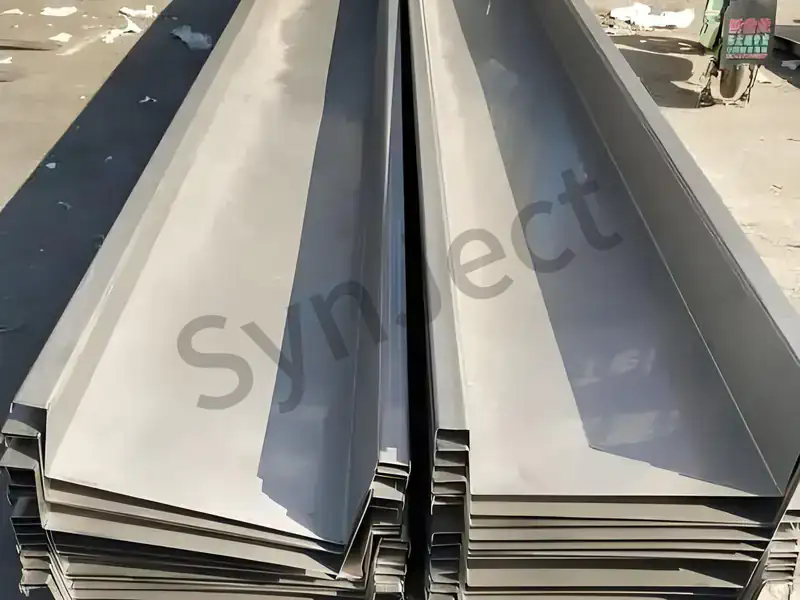
Gutters are the "flood discharge dams" for large-span roofs facing extreme weather. In tropical or rainy regions, locally sourced thin PVC eaves gutters easily overflow during storms or quickly age and shatter under the sun. We provide heavy-duty custom metal gutters (galvanized steel gutters or 304 stainless steel gutters). Based on your project's local "Maximum Rainfall Intensity" and roof catchment area, we precisely calculate the gutter's cross-sectional area using fluid dynamics. Coupled with specific overflow hole designs, even during rare century-level torrential rains, we guarantee water will never overflow the eaves and backflow into the factory, perfectly protecting indoor assets.
Technical Specifications
Advantages vs Engineering Considerations
Frequently Asked Questions
Our project is in a tropical rainforest climate with violent rainstorms. Will your gutters overflow and backflow into the factory?
Absolutely not. We strictly oppose sizing gutters "by feel." Our engineers retrieve the local "Maximum Rainfall Intensity" data for the past 50 years. Combined with the roof catchment area, we precisely calculate the gutter cross-section and downspout diameter using fluid dynamics. Paired with scientific overflow holes and baffle designs, even during rare century-level torrential rains, water is safely diverted, achieving absolute zero indoor backflow..
Locally sourced plastic downspouts turn brittle and crack in under 2 years under the equatorial sun, and metal gutters easily rust near the sea. How do you solve this?
Material selection is key to handling extreme climates. For downspouts, we use highly anti-aging modified UPVC pipes (with UV absorbers added) or high-yield color steel pipes, fearing no sun exposure or embrittlement. For gutters in high-salt coastal or chemical plants, we skip ordinary galvanized steel and upgrade directly to 304 / 316 Stainless Steel gutters. This combination perfectly resists intense UV and salt fog corrosion, ensuring the drainage system matches the building's lifespan.
Ordinary color steel screws rust after a few years, leaving ugly red rust streaks on the walls, eventually rotting and leaking. How to avoid this?
Reject cheap iron self-tapping screws! We standardly equip polar-grade anti-corrosion screws: featuring Dacromet coatings (passes 1000h salt spray) or 304 Stainless Steel. The head comes with a highly weather-resistant EPDM rubber washer. Upon drilling, the rubber ring expands to compress the hole, providing astonishing pull-out resistance and absolute physical sealing. We guarantee the screw outlasts the color steel, entirely eliminating rust streaks.
Steel roofs expand and contract violently under the blazing sun. Traditional silicone caulk cracks and leaks within 1-2 years. How long can your sealants last?
Civil silicone caulks are strictly prohibited on industrial steel structures. We standardly equip Permanent Flexible Butyl Waterproof Tapes. This is a 100% solid content, non-hardening polymer material with a 300% elastic elongation rate. No matter how violently the steel plates slide under day-night temp swings, it stretches like chewing gum without tearing. Applied correctly once, it provides over a decade of silicone-free, concealed lap-seam waterproofing.
The scariest part of typhoons is "capillary suction," where howling winds literally blow ponding water up into panel overlaps. Can your accessories prevent this?
This is the #1 pain point for leaks in typhoon zones. Besides the immensely fierce adhesion of butyl tape sealing the gaps, we mandatorily use Concealed Sliding Clips on roof systems. Panels are mechanically seamed 360° by a standing seam machine. This massive mechanical interlocking force not only thoroughly severs the suction path of rainstorms but perfectly withstands the terrifying negative wind pressure (uplift suction) generated by Cat 14 super typhoons.
Overseas labor is extremely expensive. If the containers arrive and we find two boxes of installation bolts missing, who bears the loss of the team stopping work to wait for materials?
We deeply understand that "missing accessories in overseas projects" is disastrous. Before shipping, we calculate the exact quantity of all screws, tapes, and clips 1:1 via BIM software, and mandatorily add a 3%-5% free redundancy allowance (Redundancy Guarantee). All accessories are independently boxed and coded according to drawing nodes. This ensures that once the containers land, you can start working right out of the box, never wasting even a minute of your foreign team's schedule.
To save cross-border freight, can we just buy the main steel and color panels from you, and buy screws and waterproof sealant at a local hardware store?
This is the most dangerous "penny-wise, pound-foolish" behavior in overseas engineering. Local hardware screws easily rust, and generic flashings absolutely cannot 100% fit our exclusively molded corrugated panels. Any gaps guarantee leaks. Our accessory kit is 1:1 molded and matched to the panels based on BIM models. Packaged procurement isn't expensive; it equates to paying a tiny cost to transfer 100% of the project's wind-proof and leak-proof liability to us. This is the smartest risk-hedging strategy for EPCs.
Installation Accessories
Accessories are the most inconspicuous part of the enclosure system, yet the "Achilles' heel" that most easily causes engineering disasters. Rusted screws, aged sealants, and broken clips will leave multi-million-dollar main steel structures streaking naked in typhoons. Our Comprehensive Installation Accessories Kit deeply integrates Color Steel Panel Clips, High-Strength Self-tapping Screws, Sealants, and Structural Installation Bolts at a BIM level. We don't just export boxes of parts; we deliver a "zero-leak, anti-typhoon" holistic maintenance-free solution, mechanically wind-tested and 100% matched to your specific profiles.
Technical Specifications
Advantages vs Engineering Considerations
Frequently Asked Questions
Our project is in a tropical rainforest climate with violent rainstorms. Will your gutters overflow and backflow into the factory?
Absolutely not. We strictly oppose sizing gutters "by feel." Our engineers retrieve the local "Maximum Rainfall Intensity" data for the past 50 years. Combined with the roof catchment area, we precisely calculate the gutter cross-section and downspout diameter using fluid dynamics. Paired with scientific overflow holes and baffle designs, even during rare century-level torrential rains, water is safely diverted, achieving absolute zero indoor backflow..
Locally sourced plastic downspouts turn brittle and crack in under 2 years under the equatorial sun, and metal gutters easily rust near the sea. How do you solve this?
Material selection is key to handling extreme climates. For downspouts, we use highly anti-aging modified UPVC pipes (with UV absorbers added) or high-yield color steel pipes, fearing no sun exposure or embrittlement. For gutters in high-salt coastal or chemical plants, we skip ordinary galvanized steel and upgrade directly to 304 / 316 Stainless Steel gutters. This combination perfectly resists intense UV and salt fog corrosion, ensuring the drainage system matches the building's lifespan.
Ordinary color steel screws rust after a few years, leaving ugly red rust streaks on the walls, eventually rotting and leaking. How to avoid this?
Reject cheap iron self-tapping screws! We standardly equip polar-grade anti-corrosion screws: featuring Dacromet coatings (passes 1000h salt spray) or 304 Stainless Steel. The head comes with a highly weather-resistant EPDM rubber washer. Upon drilling, the rubber ring expands to compress the hole, providing astonishing pull-out resistance and absolute physical sealing. We guarantee the screw outlasts the color steel, entirely eliminating rust streaks.
Steel roofs expand and contract violently under the blazing sun. Traditional silicone caulk cracks and leaks within 1-2 years. How long can your sealants last?
Civil silicone caulks are strictly prohibited on industrial steel structures. We standardly equip Permanent Flexible Butyl Waterproof Tapes. This is a 100% solid content, non-hardening polymer material with a 300% elastic elongation rate. No matter how violently the steel plates slide under day-night temp swings, it stretches like chewing gum without tearing. Applied correctly once, it provides over a decade of silicone-free, concealed lap-seam waterproofing.
The scariest part of typhoons is "capillary suction," where howling winds literally blow ponding water up into panel overlaps. Can your accessories prevent this?
This is the #1 pain point for leaks in typhoon zones. Besides the immensely fierce adhesion of butyl tape sealing the gaps, we mandatorily use Concealed Sliding Clips on roof systems. Panels are mechanically seamed 360° by a standing seam machine. This massive mechanical interlocking force not only thoroughly severs the suction path of rainstorms but perfectly withstands the terrifying negative wind pressure (uplift suction) generated by Cat 14 super typhoons.
Overseas labor is extremely expensive. If the containers arrive and we find two boxes of installation bolts missing, who bears the loss of the team stopping work to wait for materials?
We deeply understand that "missing accessories in overseas projects" is disastrous. Before shipping, we calculate the exact quantity of all screws, tapes, and clips 1:1 via BIM software, and mandatorily add a 3%-5% free redundancy allowance (Redundancy Guarantee). All accessories are independently boxed and coded according to drawing nodes. This ensures that once the containers land, you can start working right out of the box, never wasting even a minute of your foreign team's schedule.
To save cross-border freight, can we just buy the main steel and color panels from you, and buy screws and waterproof sealant at a local hardware store?
This is the most dangerous "penny-wise, pound-foolish" behavior in overseas engineering. Local hardware screws easily rust, and generic flashings absolutely cannot 100% fit our exclusively molded corrugated panels. Any gaps guarantee leaks. Our accessory kit is 1:1 molded and matched to the panels based on BIM models. Packaged procurement isn't expensive; it equates to paying a tiny cost to transfer 100% of the project's wind-proof and leak-proof liability to us. This is the smartest risk-hedging strategy for EPCs.
Qualification Certificate
Your projects are protected by world-class standards. From CE (EN 1090) to ISO 9001, our qualifications are not just paper—they are the rigorous daily reality on our shop floor.

Have drawings or a BOQ ready?
Related Projects
Projects where this sub-system was detailed, fabricated and shipped as part of the structural package.
SynJect:Scale. Precision. Certainty.
SYNJECT delivers comprehensive steel structure solutions engineered for the global value chain. From investors seeking ROI to engineers demanding exact compliance, we transform complex blueprints into robust realities—on time and without friction.
From Blueprint to Site. Zero Friction.
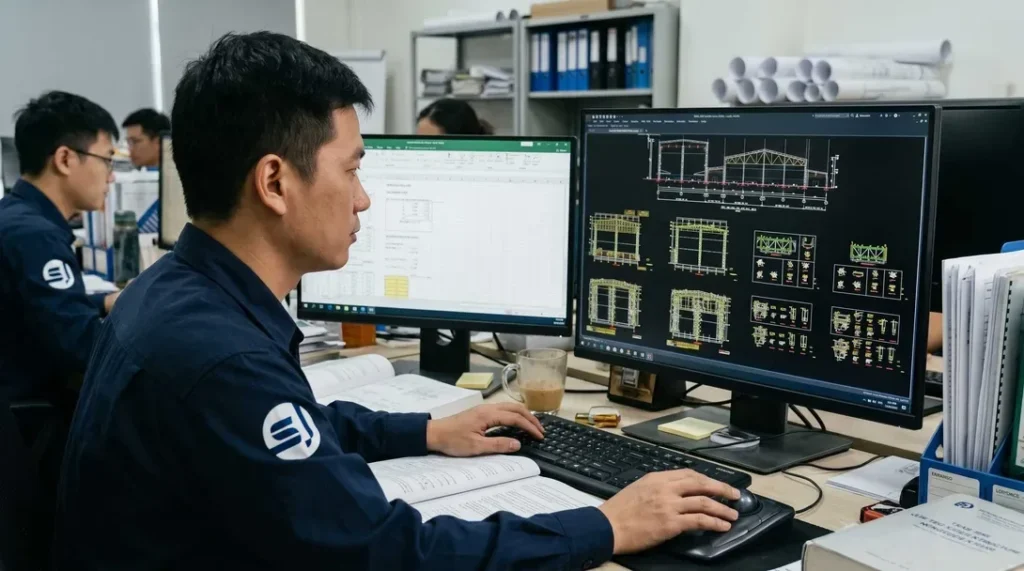


Detailed Engineering
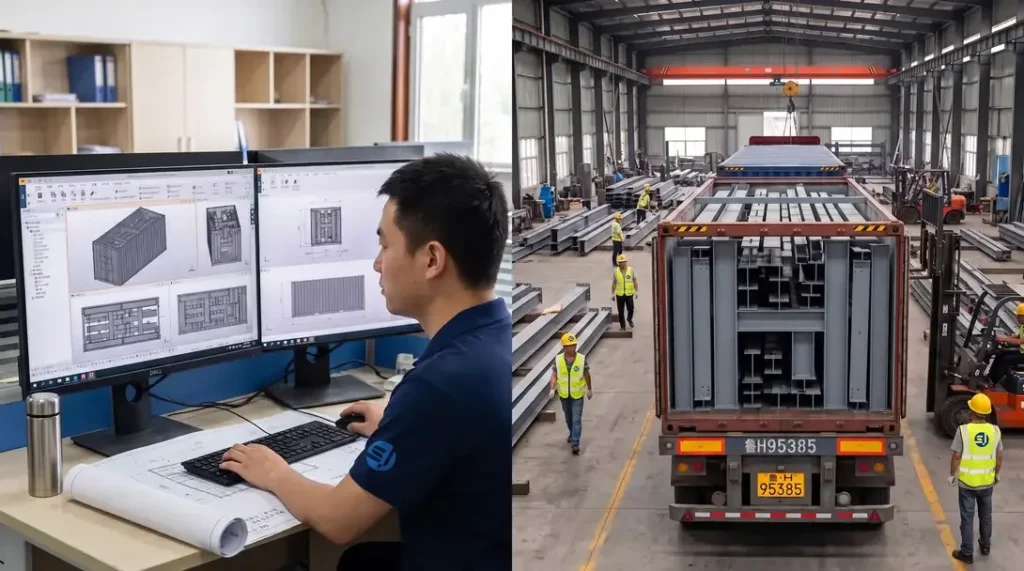
Utilizing advanced BIM platforms such as Tekla Structures, detailed 3D modeling and shop drawings are executed strictly in compliance with AISC 360 or Eurocode 3 (EN 1993). Connection designs are rigorously verified, with manufacturing drawings generated to ISO 2768-m tolerance standards. 100% clash detection with primary architectural and MEP systems is performed to ensure zero structural conflicts during field erection.
Nesting & Material Optimization
Intelligent nesting layouts are performed using advanced software like FastCAM/SigmaNEST in accordance with EN 10029 / ASTM A6 dimensional standards. Accounting for cutting kerf (2mm–5mm depending on plate thickness) and thermal contraction allowances, raw material utilization exceeds 92%. Offcuts are digitally barcode-tracked to ensure 100% mill test report (MTR) traceability.
Raw Material Incoming Inspection
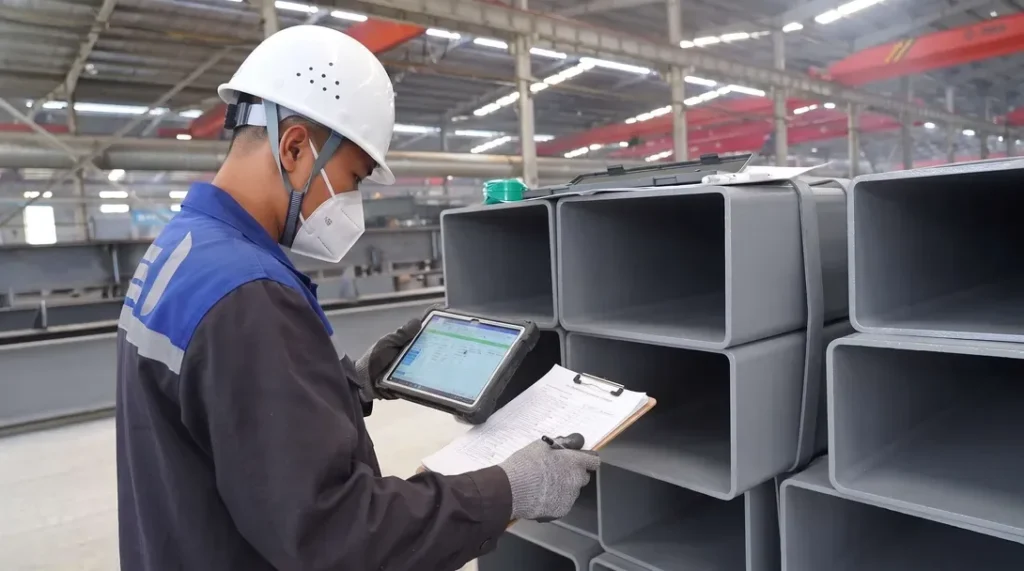
All structural steel (Q355B/C/D, ASTM A572 Gr.50, S355JR/J2) must be accompanied by EN 10204 3.1 Mill Test Reports (MTR). Incoming quality control conducts 100% dimensional and visual inspections under ASTM A6 / EN 10029, verifying thickness tolerances (Class A/B) and internal lamination integrity via Ultrasonic Testing (UT) to ASTM A435. Chemical composition and mechanical properties are spot-verified by accredited 3rd-party labs.
CNC Cutting & Edge Preparation
Plate profiling and component cutting are executed via CNC oxy-fuel, high-definition plasma, and multi-kW fiber laser equipment. Cut surface quality strictly complies with EN ISO 9013 for perpendicularity and surface roughness ±2.5°, Range 3/4 tolerance. Multi-axis CNC beveling machines execute weld prep bevel angles within ±2.5° and root face dimensions within ±1.0 mm.
Weld Distortion Straightening
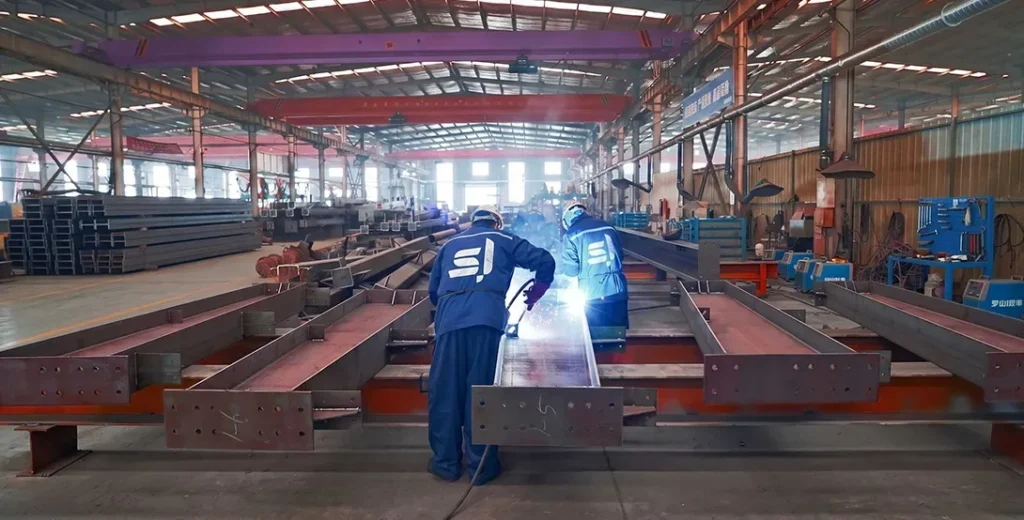
Welding is performed exclusively by AWS D1.1 or EN ISO 9606 certified welders using qualified Welding Procedure Specifications (WPS) supported by Procedure Qualification Records (PQR) per AWS D1.1 / ISO 15614. Submerged Arc Welding (SAW) and Flux-Cored Arc Welding (FCAW) dominate Complete Joint Penetration (CJP) and fillet welds. Heat input is strictly controlled, achieving weld quality levels conforming to ISO 5817 Quality Level B or AWS D1.1 standards.
Non-Destructive Testing (NDT)
Post-weld angular distortion, camber, and sweep are rectified using automated hydraulic flange straighteners and controlled thermal flame straightening. Heating temperatures for High-Strength Low-Alloy (HSLA) steels are strictly maintained between 600℃ - 650℃ (air-cooled, zero water quenching) to prevent microstructural degradation. Post-straightening straightness tolerances meet ±3 mm, conforming to EN 1090-2 Execution Class 2 (EXC2) and AISC COSP standards.
Trial Assembly & Shop Alignment
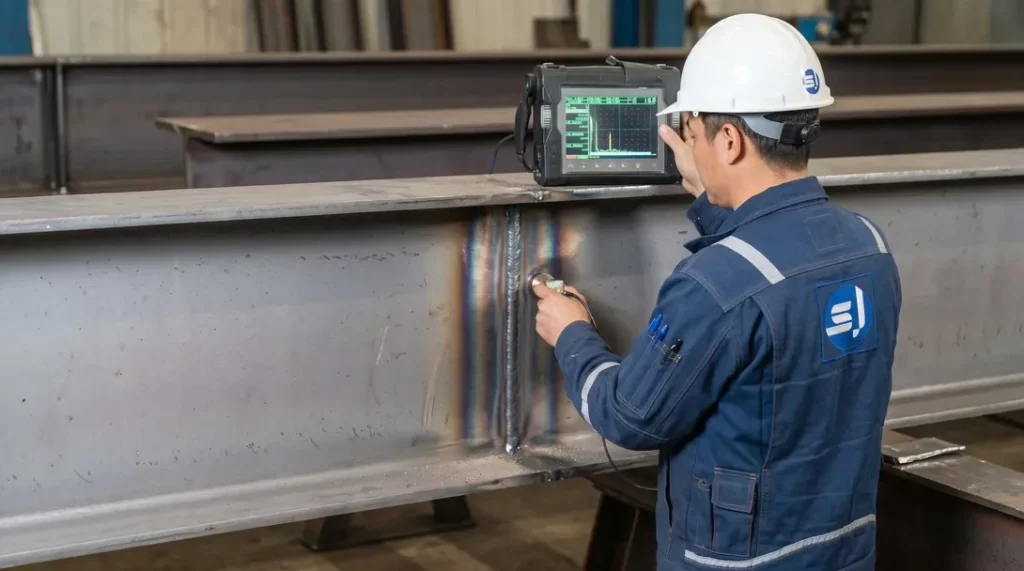
NDT protocols are operated by ISO 9712 / ASNT Level II certified NDT personnel. 100% of critical Complete Joint Penetration (CJP) welds undergo Ultrasonic Testing (UT per ISO 17640 / ASTM E164) or Magnetic Particle Testing (MT per ISO 17638 / ASTM E709). Radiographic Testing (RT) is applied as requested for heavy sections. Weld acceptance conforms strictly to ISO 11666 Acceptance Level 1 or AWS D1.1 criteria.
Surface Preparation & Protective Coating
Complex geometries, long-span trusses, and heavy framing undergo 1:1 physical trial assembly or high-precision 3D laser scanning virtual assembly per EN 1090-2 / AISC requirements. Bolt hole alignment is verified (≥ 95% free-pass rate for high-strength bolts), and critical dimensions (span, camber, 3D spatial alignment) are verified within tight tolerance limits (±2.0 mm) to eliminate site fitting risks.
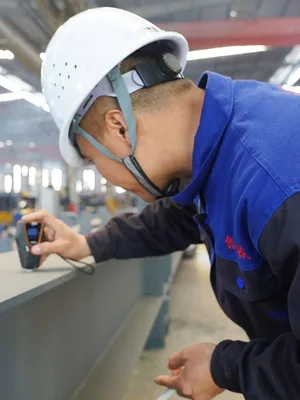
Measure Paint Film Thickness
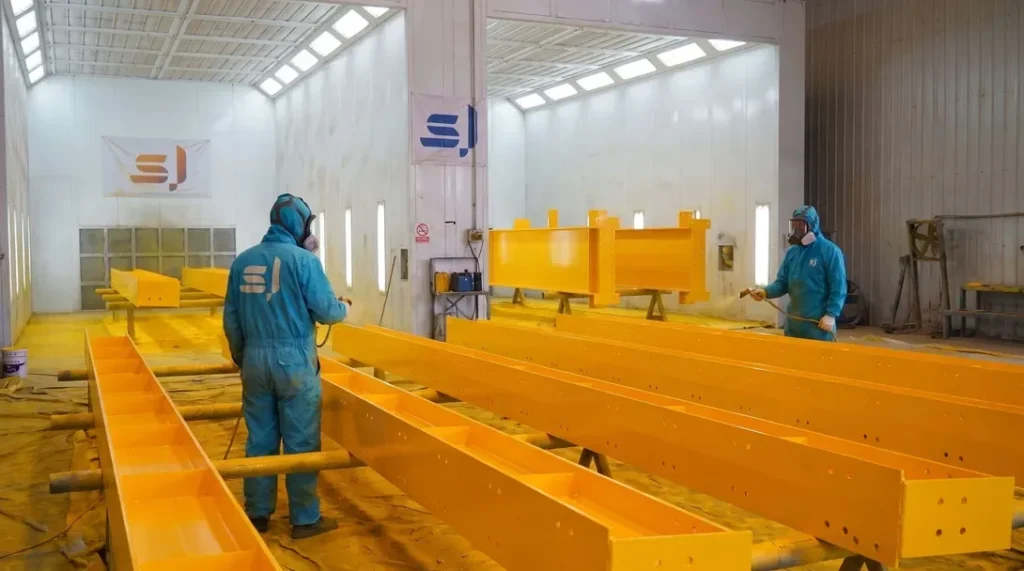
Structural members undergo automated shot blasting to achieve SSPC-SP10 / NACE No. 2 / ISO 8501-1 Sa 2.5 cleanliness, with a surface profile (anchor depth) of 45–75μm. High-performance protective coatings are applied using airless spray technology in compliance with ISO 12944 (C3 to CX corrosive environments), featuring Inorganic/Organic Zinc-Rich Epoxy Primers, Epoxy Micaceous Iron Oxide Intermediate coats, and Polyurethane/Fluorocarbon Topcoats. Dry Film Thickness (DFT) is verified using calibrated magnetic gauges adhering strictly to the 90/10 rule.
Final Quality Inspection & Certification
Final Quality Control (FQC) performs a comprehensive holistic audit, inspecting paint aesthetics (zero runs, pinholes, sagging), critical geometry, bolt hole pitches, and laser/stenciled component mark traceability. A complete Manufacturing Data Report (MDR)—comprising MTRs, NDT records, coating inspection logs, and Certificates of Conformance—is compiled to support CE Marking (DoP under EN 1090) and AISC final acceptance.
Export Packaging & Logistics Protection
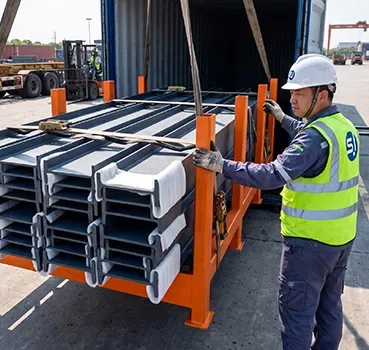
Protective packaging is engineered for containerized (40HQ/OT/FR) and breakbulk ocean freight under heavy maritime transit conditions. Structural members are bundled on heavy-duty steel skids with high-tensile steel strapping. Machined connections and contact surfaces are wrapped with VCI anti-corrosion film, EPE foam padding, and heavy rubber cushions. All timber packing complies fully with ISPM 15 phytosanitary standards and IMO Cargo Stowage and Securing (CSS) rules.
Global Field Erection & Site Management
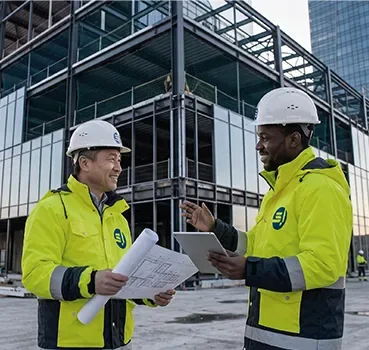
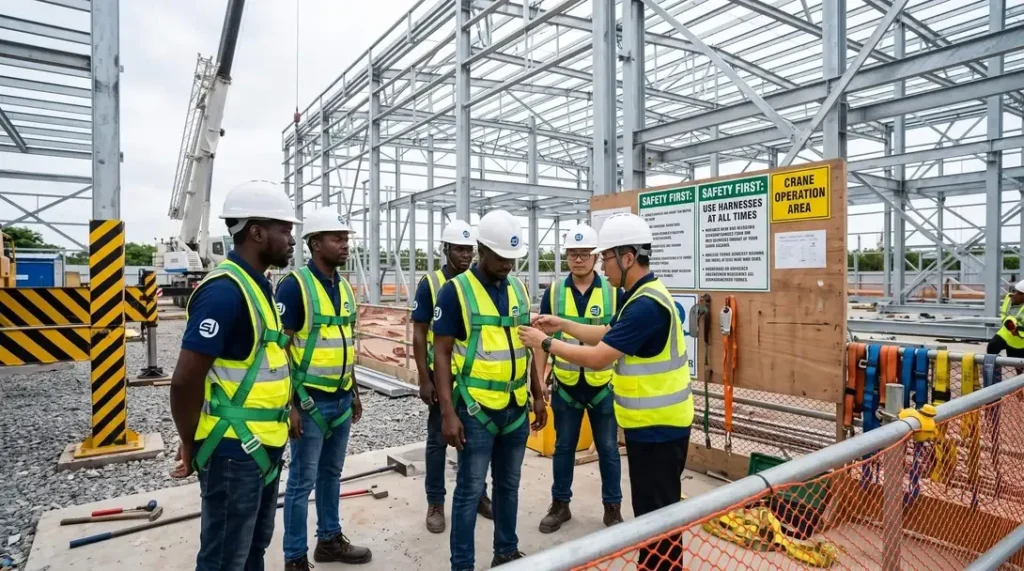
We deliver international site erection supervision and turnkey EPCM construction services adhering to OSHA 1926 safety protocols, AISC COSP, and EN 1090-2 erection standards. Field teams, led by multilingual HSE and QA/QC engineers, utilize high-precision total stations to maintain structural plumbness within H/1000 (≤25mm max). High-Strength Structural Bolting is executed via calibrated Wrench or Turn-of-Nut methods with 100% torque audit documentation.
Get Your 24-Hour BOQ and Cost Plan
See how much steel tonnage and ocean freight you can save before fabrication begins
Steel Weight Savings
1:1 Tekla 3D modeling optimizes beam-column ratios to eliminate redundant material costs.
Zero-Clash Code Verification
Checked against EN 1090 and local wind/seismic loads.
Engineer-to-Engineer Review
Verified by our lead engineers—Zero pushy sales calls, Just actionable data and factory price.
CE EN 1090-1•ISO 9001•ISO 14001•ISO 45001
Lead Engineers Online
🔒 100% Private and Secure, No Spam